Buy kopa-houtskooloven.be ?
We are moving the project
kopa-houtskooloven.be .
Are you interested in purchasing the domain
kopa-houtskooloven.be ?
domain@kv-gmbh.de · 0541-91531010
Buy kopa-houtskooloven.be ?
Can you continue cooking eggs the next day?
Yes, you can continue cooking eggs the next day. If you have partially cooked eggs, you can store them in the refrigerator and finish cooking them the next day. However, if you have fully cooked eggs, you can reheat them the next day but it's best to consume them within 2-3 days for the best quality. Always make sure to store cooked eggs properly in an airtight container in the refrigerator to prevent spoilage. **
'Next or next?'
"Next" is used to refer to the following item in a sequence or the immediate future, while "next?" is a question asking for confirmation or clarification about what comes after the current item or action. For example, "What's the next step in the process?" versus "Next?" to prompt someone to continue speaking or to ask for the next item in a list. **


Similar search terms for Next
Top-Angebote
Products related to Next:
-
SPL Lab Next-Lab RTAThe Next-Lab RTA is a Measurement Microphone from SPL Lab with Lab-Bus digital bus and anodized aluminum housing. The frequency range is from 10 to 20000 Hz. The amplitude range covers 50 to 120 dB, with the High SPL Edition ranging from 60 to 155 dB. The internal accuracy is ADC 16 Bit. Calibration is done according to Audiomatica CLIO, and for the High SPL Edition, it is calibrated according to TERM-LAB. Highly sensitive, omnidirectional electret microphone inserts, low-frequency amplifiers, ADC units, and a Lab-Bus interface are integrated; special notches surround the microphone insert, allowing for tripod mounting. Features Measurement Microphone Lab-Bus digital bus Anodized aluminum housing Highly sensitive, omnidirectional electret microphone inserts Low-frequency amplifier integrated ADC units integrated Lab-Bus interface Lab-Bus port for data transmission Special notches around the microphone insert Tripod mounting possible Calibrated according to Audiomatica CLIO Calibrated according to TERM-LAB (High SPL Edition) Included: microphone for measuring AFC, Lab-Bus connection cable Technical Specifications Frequency range 10 to 20000 Hz Amplitude range 50 to 120 dB Amplitude range 60 to 155 dB (High SPL Edition) Internal accuracy ADC 16 Bit300,99 €*Shipping: 0,00 €Secure redirect to the provider
-
SPL Lab Next-LCD SEThe Next-LCD SE from SPL Lab is a versatile SPL Meter designed for precise sound pressure measurements. Equipped with a high-resolution color display, it offers real-time readings and allows for cascading use with multiple sensors and microphones via Lab Bus ports. Thanks to integrated features such as distortion and clip detection, as well as flexible power supply via USB-C or batteries, it is ideal for both car audio competitions and use in home and professional sound systems. With various software modes like SPL, AVG, and RTA, you can perform comprehensive measurements and analyze the results directly on the display. Its compact and robust design ensures easy handling and smooth operation in various environments. Highlights Autonomous Measuring Device with high-resolution color display for real-time display Cascadable via two Lab Bus ports for sensors and microphones Simultaneous operation with two different signal sources possible Integrated distortion and clip detector for clean tuning Flexible power supply via USB-C or batteries Features Sound pressure measurement with Next-Lab SPL Sensor Frequency response measurement and spectral analysis with Next-Lab RTA Microphone Volt-ampere measurement in AC/DC circuits with Next-Lab Power Sensor Simultaneous operation with two signal sources Display of waveform and spectrum directly on the display Numerical measurement display in real-time Device control and data transfer to PC via USB-C Fine-tuning of car audio, home, and professional sound systems Measurement and adjustment of vehicle and industrial power grids Suitable for car audio competitions like AMT, EMMA, dB Drag, and IASCA Software Modes SPL Mode: Peak sound pressure measurement with spectrum and waveform AVG Mode: Capture of time-averaged sound pressure values RTA Mode: Frequency response measurement with spectral representation in octave bands PWR Mode: Measurement of current, voltage, power, frequency, and clip SQL Mode: Volume measurement for front and rear systems Hybrid Modes: SPL+PWR and AVG+PWR to determine acoustic efficiency PC Mode: Data transfer to the SPL Lab Measuring Center Software Ergonomics & Connections Compact monoblock housing made of impact-resistant plastic High-resolution color display with backlighting Four control buttons and tri-color LED for status indication Two digital Lab Bus ports for external sensors USB-C port for power supply and data transfer Operation via USB-C or four AA batteries Scope of Delivery Main device Next-LCD SE USB cable for power supply or PC connection SPL Lab Measuring Center Software for Windows Audio CD with setup tracks401,65 €*Shipping: 0,00 €Secure redirect to the provider
-
SPL Lab Next-Lab SPL SensorThe SPL Lab Next-Lab SPL Sensor is an SPL Meter designed for operation with Next-LCD and Next-USB. The signal is digitized internally via a 16-bit ADC and transmitted digitally over the Lab Bus. Cable signal transmission is possible up to 10 m. An extended amplitude range and a noise reduction system allow for measurement accuracy of up to 0.1 dB. Calibrated according to TERM-LAB, each unit is tested and calibrated. Monoblock design with high-frequency semiconductor sensor, integrated ADC module, and Lab Bus interface including Lab Bus port. Vacuum suction cups on the back for attachment to smooth surfaces like glass, housing made of impact-resistant plastic. Frequency range 10–120 Hz with an amplitude range of 110–185 dB; Wide Band Edition with 10–20000 Hz and 100–182 dB. Supports measurement of sound pressure level (SPL), spectral analysis (AFC), signal waveform, and measurement of harmonic distortions of low-frequency signals as well as measurement of noise levels and characteristics of acoustic systems. Features SPL Meter Lab Bus digital bus Internal 16-bit ADC Signal digitization directly in the sensor Digital data transmission via Lab Bus Cable length for data transmission up to 10 m Extended amplitude range Noise reduction system Measurement accuracy up to 0.1 dB Calibrated according to TERM-LAB Monoblock design High-frequency semiconductor sensor Integrated ADC module Lab Bus interface with Lab Bus port Housing made of impact-resistant plastic Vacuum suction cups for attachment to smooth surfaces like glass Compatible with Next-LCD and Next-USB Measurement of sound pressure level (SPL) Spectral analysis (AFC) Receive and analyze signal waveform Measurement of harmonic distortions of low-frequency signals Measurement of noise levels Measurement of characteristics of acoustic systems Technical Specifications Frequency range standard: 10–120 Hz Amplitude range standard: 110–185 dB Frequency range Wide Band Edition: 10–20000 Hz Amplitude range Wide Band Edition: 100–182 dB Internal precision ADC: 16 bit Measurement accuracy: up to 0.1 dB Calibration: TERM-LAB Data transmission: digital via Lab Bus Maximum cable length for transmission: 10 m285,94 €*Shipping: 0,00 €Secure redirect to the provider
-
SPL Lab Next-Lab Power SensorThe Next-Lab Power Sensor is an SPL Meter from SPL Lab with a digital lab bus and internal dual-channel ADC. It allows measurements of direct current circuits (only Hall sensor version) as well as alternating current circuits with a frequency of up to 15000 Hz. The non-contact current sensor covers 1 to 1200 A (Hall sensor version) or up to 400 A in the current clamp version. The voltage measurement ranges from 1 to 300 volts. The power measurement is up to 360 kW (Hall sensor version) or up to 120 kW (current clamp version). True-RMS algorithm, impedance measurement, and distortion detector (clip) are integrated. Features SPL Meter Digital lab bus Internal dual-channel ADC Non-contact current sensor 1 to 1200 A (Hall sensor version) Non-contact current sensor up to 400 A (current clamp version) Measurement of direct current circuits (only Hall sensor version) Measurement of alternating current circuits up to 15000 Hz Voltage measurement 1 to 300 V Power measurement up to 360 kW (Hall sensor version) Power measurement up to 120 kW (current clamp version) True-RMS algorithm Impedance measurement Distortion detector (clip) Technical Specifications Assessment of the quality index of electrical home and industrial networks Measurement of direct current, voltage, and power (only Hall sensors) Measurement of alternating current, voltage, and power according to True-RMS Measurement of the impedance of acoustic systems Determination of the harmonic distortion coefficient Measurement of the AFC of the audio path Receiving and analyzing the signal waveform Adjusting the levels (gain) of various amplifier channels to each other Tuning the car radio and amplifiers by monitoring the harmonic distortion, AFC, and waveform of the reproduced signal Setting and adjusting the cutoff frequencies for crossovers and internal filters Fine-tuning the components of the audio system Setting the distortion factor coefficient Package contents: power sensor Package contents: lab bus connection cable348,81 €*Shipping: 0,00 €Secure redirect to the provider


-
Do you prefer smoking with charcoal or with a smoking vessel?
I prefer smoking with charcoal because it gives the food a distinct smoky flavor that is difficult to achieve with a smoking vessel alone. Charcoal also provides a more traditional and authentic smoking experience, and it allows for better control of the temperature and smoke levels. Additionally, I enjoy the process of tending to the charcoal and adjusting it as needed throughout the smoking process. **
-
What is the difference between charcoal and wood when grilling?
The main difference between charcoal and wood when grilling is the source of heat. Charcoal is made from partially burned wood, and it burns hotter and more consistently than wood. Wood, on the other hand, can impart a smokier flavor to the food being grilled. Charcoal is often preferred for its convenience and ease of use, while wood is favored by those looking to add a distinct smoky flavor to their dishes. **
-
Where do you place the grill for the outdoor BBQ?
When setting up for an outdoor BBQ, it's important to place the grill in a safe and convenient location. Choose a flat, stable surface away from any flammable materials such as dry grass or overhanging branches. It's also a good idea to position the grill in an area with good ventilation to prevent smoke buildup. Additionally, consider the proximity to seating and food preparation areas for easy access. Always follow the manufacturer's guidelines for safe grill placement. **
-
Is grilling with charcoal a physical process or a chemical reaction?
Grilling with charcoal is a physical process. When charcoal is burned, it undergoes a combustion reaction, which is a chemical process. However, the act of grilling itself, which involves placing food over the heat produced by burning charcoal, is a physical process. The heat from the burning charcoal causes the food to cook through conduction and radiation, which are physical processes. Therefore, grilling with charcoal is primarily a physical process. **
What is your question about smoking marijuana and standing next to it?
My question about smoking marijuana and standing next to it is whether secondhand marijuana smoke can have any potential health effects on individuals who are standing nearby. I am curious to know if the smoke from marijuana can have similar effects to secondhand tobacco smoke, and if there are any specific risks associated with being in close proximity to someone smoking marijuana. Additionally, I am interested in understanding the potential impact of secondhand marijuana smoke on non-smokers, especially in enclosed or poorly ventilated spaces. **
What is your question about smoking weed and standing next to it?
My question about smoking weed and standing next to it is whether secondhand smoke from marijuana can have similar health effects as secondhand smoke from tobacco. Additionally, I am curious about the potential risks of inhaling secondhand marijuana smoke, especially in enclosed or poorly ventilated spaces. Lastly, I am interested in understanding the social and legal implications of being near someone smoking weed in public settings. **
Top-Angebote
Products related to Next:
-
SPL Lab Next USBThe next USB product is an SPL Meter from SPL Lab with four independent Lab Bus connections for pressure sensors, microphones, or power sensors. It does not have a built-in display and is not intended for standalone operation. Control and data transfer occur via USB to a PC or optionally wirelessly through a built-in Wi-Fi module to a tablet PC or smartphone. Simultaneous operation with four signal sources is possible. The monoblock design includes a control button, a USB port for connecting to the PC and charging, four Lab Bus connections, a power switch, and a three-color LED to indicate status and battery charge. The housing is made of shock-resistant plastic. The system is cascadeable. Measurements are supported with Next-Lab SPL Sensor, Next-Lab RTA Microphone, and Next-Lab Power Sensor. Features SPL Meter Four independent Lab Bus connections for pressure sensors, microphones, or power sensors Simultaneous operation with four signal sources Control and data transfer via USB with PC Optional wireless connection via built-in Wi-Fi module with tablet PC or smartphone Compatible with Next-Lab SPL Sensor, Next-Lab RTA Microphone, Next-Lab Power Sensor Cascadeable No built-in display, not for standalone operation Technical Specifications Design: Monoblock Housing material: shock-resistant plastic Interfaces: USB, Wi-Fi optional Controls: control button, power switch Display: three-color LED for status and battery level USB port for PC connection and charging401,65 €*Shipping: 0,00 €Secure redirect to the provider
-
SPL Lab Next LCDThe next LCD product is an autonomous SPL Meter from SPL Lab with a graphical display and backlighting. Two lab bus connections are provided for connecting sensors, complemented by an integrated signal generator for sine and noise. The internal battery, a USB port for charging and PC connection, as well as two RCA outputs of the audio signal generator are integrated. The software is updatable and allows data transfer to the PC, with optional Wi-Fi support. The device is designed as a monoblock, has 8 control buttons, and a three-color LED to indicate status and battery charge. The housing is made of shock-resistant plastic; display of spectrum and waveform as well as operation with two signal sources are provided. Features SPL Meter Completely autonomous Internal battery Graphical display with backlighting Two lab bus connections for connecting sensors Audio signal generator: sine, noise Updatable software Data transfer to the PC Optional Wi-Fi support USB port for charging and PC connection Two RCA outputs of the audio signal generator 8 control buttons Three-color LED for status and charge indication Monoblock design Housing made of shock-resistant plastic Technical Specifications Software modes: SPL mode for measuring sound pressure peak values with spectrum and waveform display, distortion clip detector, simultaneous operation with two signal sources AVG mode for measuring the temporal average value of a sound pressure, simultaneous operation with two signal sources RTA mode for measuring AFC with spectrum and waveform display, spectrum division into octaves, distortion clip detector PWR mode for measuring alternating and direct current, voltage, power, signal frequency, and nonlinear distortion clip, simultaneous operation with two signal sources GEN mode: background stereo generator for test signals sine, pink noise, white noise CON mode: connection to the PC, adjustment and transfer of digitized data for analysis in Measuring Center for Windows Functions: measuring sound pressure with Next-Lab SPL sensor Measuring AFC and spectral analysis of the signal with Next-Lab RTA microphone Measurement of the power characteristics of direct and alternating current circuits with Next-Lab Power Sensor Simultaneous operation with two signal sources Audio signal generator operates in the background alongside measurement Display of signal form and spectrum on the screen Digital display of measurement values on the screen Control and data transfer via USB port or wireless network to a PC Preparation and execution of car audio competitions AMT, EMMA, dB Drag, IASCA, BassRace as well as via the internet optionally Measurement of the characteristics of acoustic systems for home, in cars, or in concert halls and their setup Ergonomics: USB port for connection to a PC and for charging Two lab bus connections for sensors Two RCA outputs of the audio signal generator Delivery switch Three-color LED to indicate status and battery charge Monoblock design, housing...401,65 €*Shipping: 0,00 €Secure redirect to the provider
-
SPL Lab Next-Lab RTAThe Next-Lab RTA is a Measurement Microphone from SPL Lab with Lab-Bus digital bus and anodized aluminum housing. The frequency range is from 10 to 20000 Hz. The amplitude range covers 50 to 120 dB, with the High SPL Edition ranging from 60 to 155 dB. The internal accuracy is ADC 16 Bit. Calibration is done according to Audiomatica CLIO, and for the High SPL Edition, it is calibrated according to TERM-LAB. Highly sensitive, omnidirectional electret microphone inserts, low-frequency amplifiers, ADC units, and a Lab-Bus interface are integrated; special notches surround the microphone insert, allowing for tripod mounting. Features Measurement Microphone Lab-Bus digital bus Anodized aluminum housing Highly sensitive, omnidirectional electret microphone inserts Low-frequency amplifier integrated ADC units integrated Lab-Bus interface Lab-Bus port for data transmission Special notches around the microphone insert Tripod mounting possible Calibrated according to Audiomatica CLIO Calibrated according to TERM-LAB (High SPL Edition) Included: microphone for measuring AFC, Lab-Bus connection cable Technical Specifications Frequency range 10 to 20000 Hz Amplitude range 50 to 120 dB Amplitude range 60 to 155 dB (High SPL Edition) Internal accuracy ADC 16 Bit300,99 €*Shipping: 0,00 €Secure redirect to the provider
-
SPL Lab Next-LCD SEThe Next-LCD SE from SPL Lab is a versatile SPL Meter designed for precise sound pressure measurements. Equipped with a high-resolution color display, it offers real-time readings and allows for cascading use with multiple sensors and microphones via Lab Bus ports. Thanks to integrated features such as distortion and clip detection, as well as flexible power supply via USB-C or batteries, it is ideal for both car audio competitions and use in home and professional sound systems. With various software modes like SPL, AVG, and RTA, you can perform comprehensive measurements and analyze the results directly on the display. Its compact and robust design ensures easy handling and smooth operation in various environments. Highlights Autonomous Measuring Device with high-resolution color display for real-time display Cascadable via two Lab Bus ports for sensors and microphones Simultaneous operation with two different signal sources possible Integrated distortion and clip detector for clean tuning Flexible power supply via USB-C or batteries Features Sound pressure measurement with Next-Lab SPL Sensor Frequency response measurement and spectral analysis with Next-Lab RTA Microphone Volt-ampere measurement in AC/DC circuits with Next-Lab Power Sensor Simultaneous operation with two signal sources Display of waveform and spectrum directly on the display Numerical measurement display in real-time Device control and data transfer to PC via USB-C Fine-tuning of car audio, home, and professional sound systems Measurement and adjustment of vehicle and industrial power grids Suitable for car audio competitions like AMT, EMMA, dB Drag, and IASCA Software Modes SPL Mode: Peak sound pressure measurement with spectrum and waveform AVG Mode: Capture of time-averaged sound pressure values RTA Mode: Frequency response measurement with spectral representation in octave bands PWR Mode: Measurement of current, voltage, power, frequency, and clip SQL Mode: Volume measurement for front and rear systems Hybrid Modes: SPL+PWR and AVG+PWR to determine acoustic efficiency PC Mode: Data transfer to the SPL Lab Measuring Center Software Ergonomics & Connections Compact monoblock housing made of impact-resistant plastic High-resolution color display with backlighting Four control buttons and tri-color LED for status indication Two digital Lab Bus ports for external sensors USB-C port for power supply and data transfer Operation via USB-C or four AA batteries Scope of Delivery Main device Next-LCD SE USB cable for power supply or PC connection SPL Lab Measuring Center Software for Windows Audio CD with setup tracks401,65 €*Shipping: 0,00 €Secure redirect to the provider
-
Can you continue cooking eggs the next day?
Yes, you can continue cooking eggs the next day. If you have partially cooked eggs, you can store them in the refrigerator and finish cooking them the next day. However, if you have fully cooked eggs, you can reheat them the next day but it's best to consume them within 2-3 days for the best quality. Always make sure to store cooked eggs properly in an airtight container in the refrigerator to prevent spoilage. **
-
'Next or next?'
"Next" is used to refer to the following item in a sequence or the immediate future, while "next?" is a question asking for confirmation or clarification about what comes after the current item or action. For example, "What's the next step in the process?" versus "Next?" to prompt someone to continue speaking or to ask for the next item in a list. **
-
Do you prefer smoking with charcoal or with a smoking vessel?
I prefer smoking with charcoal because it gives the food a distinct smoky flavor that is difficult to achieve with a smoking vessel alone. Charcoal also provides a more traditional and authentic smoking experience, and it allows for better control of the temperature and smoke levels. Additionally, I enjoy the process of tending to the charcoal and adjusting it as needed throughout the smoking process. **
-
What is the difference between charcoal and wood when grilling?
The main difference between charcoal and wood when grilling is the source of heat. Charcoal is made from partially burned wood, and it burns hotter and more consistently than wood. Wood, on the other hand, can impart a smokier flavor to the food being grilled. Charcoal is often preferred for its convenience and ease of use, while wood is favored by those looking to add a distinct smoky flavor to their dishes. **
Similar search terms for Next
-
SPL Lab Next-Lab SPL SensorThe SPL Lab Next-Lab SPL Sensor is an SPL Meter designed for operation with Next-LCD and Next-USB. The signal is digitized internally via a 16-bit ADC and transmitted digitally over the Lab Bus. Cable signal transmission is possible up to 10 m. An extended amplitude range and a noise reduction system allow for measurement accuracy of up to 0.1 dB. Calibrated according to TERM-LAB, each unit is tested and calibrated. Monoblock design with high-frequency semiconductor sensor, integrated ADC module, and Lab Bus interface including Lab Bus port. Vacuum suction cups on the back for attachment to smooth surfaces like glass, housing made of impact-resistant plastic. Frequency range 10–120 Hz with an amplitude range of 110–185 dB; Wide Band Edition with 10–20000 Hz and 100–182 dB. Supports measurement of sound pressure level (SPL), spectral analysis (AFC), signal waveform, and measurement of harmonic distortions of low-frequency signals as well as measurement of noise levels and characteristics of acoustic systems. Features SPL Meter Lab Bus digital bus Internal 16-bit ADC Signal digitization directly in the sensor Digital data transmission via Lab Bus Cable length for data transmission up to 10 m Extended amplitude range Noise reduction system Measurement accuracy up to 0.1 dB Calibrated according to TERM-LAB Monoblock design High-frequency semiconductor sensor Integrated ADC module Lab Bus interface with Lab Bus port Housing made of impact-resistant plastic Vacuum suction cups for attachment to smooth surfaces like glass Compatible with Next-LCD and Next-USB Measurement of sound pressure level (SPL) Spectral analysis (AFC) Receive and analyze signal waveform Measurement of harmonic distortions of low-frequency signals Measurement of noise levels Measurement of characteristics of acoustic systems Technical Specifications Frequency range standard: 10–120 Hz Amplitude range standard: 110–185 dB Frequency range Wide Band Edition: 10–20000 Hz Amplitude range Wide Band Edition: 100–182 dB Internal precision ADC: 16 bit Measurement accuracy: up to 0.1 dB Calibration: TERM-LAB Data transmission: digital via Lab Bus Maximum cable length for transmission: 10 m285,94 €*Shipping: 0,00 €Secure redirect to the provider
-
SPL Lab Next-Lab Power SensorThe Next-Lab Power Sensor is an SPL Meter from SPL Lab with a digital lab bus and internal dual-channel ADC. It allows measurements of direct current circuits (only Hall sensor version) as well as alternating current circuits with a frequency of up to 15000 Hz. The non-contact current sensor covers 1 to 1200 A (Hall sensor version) or up to 400 A in the current clamp version. The voltage measurement ranges from 1 to 300 volts. The power measurement is up to 360 kW (Hall sensor version) or up to 120 kW (current clamp version). True-RMS algorithm, impedance measurement, and distortion detector (clip) are integrated. Features SPL Meter Digital lab bus Internal dual-channel ADC Non-contact current sensor 1 to 1200 A (Hall sensor version) Non-contact current sensor up to 400 A (current clamp version) Measurement of direct current circuits (only Hall sensor version) Measurement of alternating current circuits up to 15000 Hz Voltage measurement 1 to 300 V Power measurement up to 360 kW (Hall sensor version) Power measurement up to 120 kW (current clamp version) True-RMS algorithm Impedance measurement Distortion detector (clip) Technical Specifications Assessment of the quality index of electrical home and industrial networks Measurement of direct current, voltage, and power (only Hall sensors) Measurement of alternating current, voltage, and power according to True-RMS Measurement of the impedance of acoustic systems Determination of the harmonic distortion coefficient Measurement of the AFC of the audio path Receiving and analyzing the signal waveform Adjusting the levels (gain) of various amplifier channels to each other Tuning the car radio and amplifiers by monitoring the harmonic distortion, AFC, and waveform of the reproduced signal Setting and adjusting the cutoff frequencies for crossovers and internal filters Fine-tuning the components of the audio system Setting the distortion factor coefficient Package contents: power sensor Package contents: lab bus connection cable348,81 €*Shipping: 0,00 €Secure redirect to the provider
-
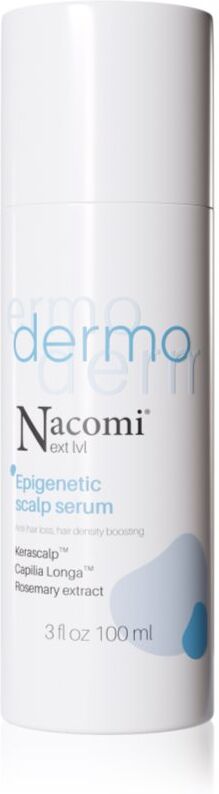
Nacomi Next Level Dermo sérum cheveux en spray 100 mlNacomi Next Level Dermo, 100 ml, Sérums capillaires pour femme, Le soin sans rinçage Nacomi Next Level Dermo s’applique sur vos cheveux fraîchement lavés, il leur apporte tout ce dont ils ont besoin. Le produit : apaise le cuir chevelu irrité apporte aux cheveux l’hydratation nécessaire nourrit les cheveux sur toute leur longueur pénètre dans le cuir chevelu pour le renforcer Composition du produit : produit végétalien Mode d’emploi : Appliquez le produit directement sur le cuir chevelu et sur des cheveux secs ou bien sur des cheveux lavés et séchés à l’aide d’une serviette.6,90 €*Shipping: 3,45 €Secure redirect to the provider
-
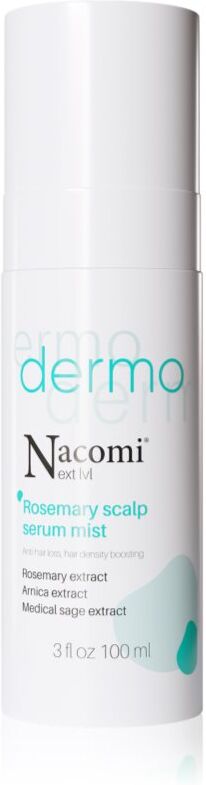
Nacomi Next Level Dermo sérum cheveux en spray Rosemary 100 mlNacomi Next Level Dermo, 100 ml, Sérums capillaires pour femme, Le soin sans rinçage Nacomi Next Level Dermo procure aux cheveux une dose instantanée d’hydratation et de nutrition intenses. Ce soin leur donne tout ce dont ils ont besoin juste après le lavage, sans avoir à passer plus de temps que nécessaire dans la salle de bains. Il contribue à lisser les cheveux, à leur redonner leur brillance naturelle et à restaurer leur structure. Il favorise également leur régénération et facilite le démêlage. Tout cela facilement, rapidement et sans rinçage. Il suffit de l’appliquer, de frotter ou éventuellement de les peigner pour que les cheveux retrouvent toute leur beauté et leur éclat. Essayez ce soin sans rinçage, un moyen simple et rapide de régénérer vos cheveux, et découvrez tous ses autres bienfaits. Le produit : apaise le cuir chevelu irrité pénètre dans le cuir chevelu pour le renforcer redonne de la force aux cheveux apporte aux cheveux l’hydratation nécessaire Composition du produit : produit végétalien Mode d’emploi : Appliquez le produit directement sur le cuir chevelu et sur des cheveux secs ou bien sur des cheveux lavés et séchés à l’aide d’une serviette.4,50 €*Shipping: 3,45 €Secure redirect to the provider
-
Where do you place the grill for the outdoor BBQ?
When setting up for an outdoor BBQ, it's important to place the grill in a safe and convenient location. Choose a flat, stable surface away from any flammable materials such as dry grass or overhanging branches. It's also a good idea to position the grill in an area with good ventilation to prevent smoke buildup. Additionally, consider the proximity to seating and food preparation areas for easy access. Always follow the manufacturer's guidelines for safe grill placement. **
-
Is grilling with charcoal a physical process or a chemical reaction?
Grilling with charcoal is a physical process. When charcoal is burned, it undergoes a combustion reaction, which is a chemical process. However, the act of grilling itself, which involves placing food over the heat produced by burning charcoal, is a physical process. The heat from the burning charcoal causes the food to cook through conduction and radiation, which are physical processes. Therefore, grilling with charcoal is primarily a physical process. **
-
What is your question about smoking marijuana and standing next to it?
My question about smoking marijuana and standing next to it is whether secondhand marijuana smoke can have any potential health effects on individuals who are standing nearby. I am curious to know if the smoke from marijuana can have similar effects to secondhand tobacco smoke, and if there are any specific risks associated with being in close proximity to someone smoking marijuana. Additionally, I am interested in understanding the potential impact of secondhand marijuana smoke on non-smokers, especially in enclosed or poorly ventilated spaces. **
-
What is your question about smoking weed and standing next to it?
My question about smoking weed and standing next to it is whether secondhand smoke from marijuana can have similar health effects as secondhand smoke from tobacco. Additionally, I am curious about the potential risks of inhaling secondhand marijuana smoke, especially in enclosed or poorly ventilated spaces. Lastly, I am interested in understanding the social and legal implications of being near someone smoking weed in public settings. **
* All prices are inclusive of VAT and, if applicable, plus shipping costs. The offer information is based on the details provided by the respective shop and is updated through automated processes. Real-time updates do not occur, so deviations can occur in individual cases. ** Note: Parts of this content were created by AI.